

One of the most overlooked parts of visiting Niagara Falls isn’t the destination itself—it’s the contrast between where you start and where you end up.
For many travellers, the journey begins in Toronto, a city defined by structure, movement, and urban rhythm. By the time you reach Niagara Falls, that environment has completely shifted into something far more raw and unpredictable.
That transition is what makes the experience so memorable.
Leaving the City Behind
Toronto moves fast. Traffic, schedules, crowded streets—it’s a place where everything feels planned and controlled.
As you leave the city, that structure gradually fades. High-rise buildings give way to open roads, and the pace begins to slow. The noise of the city is replaced by quieter surroundings, and the journey starts to feel less like commuting and more like travelling.
This change isn’t just physical—it resets your mindset.
The Gradual Build-Up
Unlike destinations that reveal themselves instantly, Niagara Falls builds anticipation.
You don’t see it from miles away. Instead, there’s a moment when the environment starts to hint at what’s coming—the increasing sound, the movement of water, the growing presence of mist in the air.
By the time the falls come into full view, the experience has already begun.
A Natural Force That Breaks Expectations
Photos of Niagara Falls often focus on its beauty, but they rarely capture its intensity.
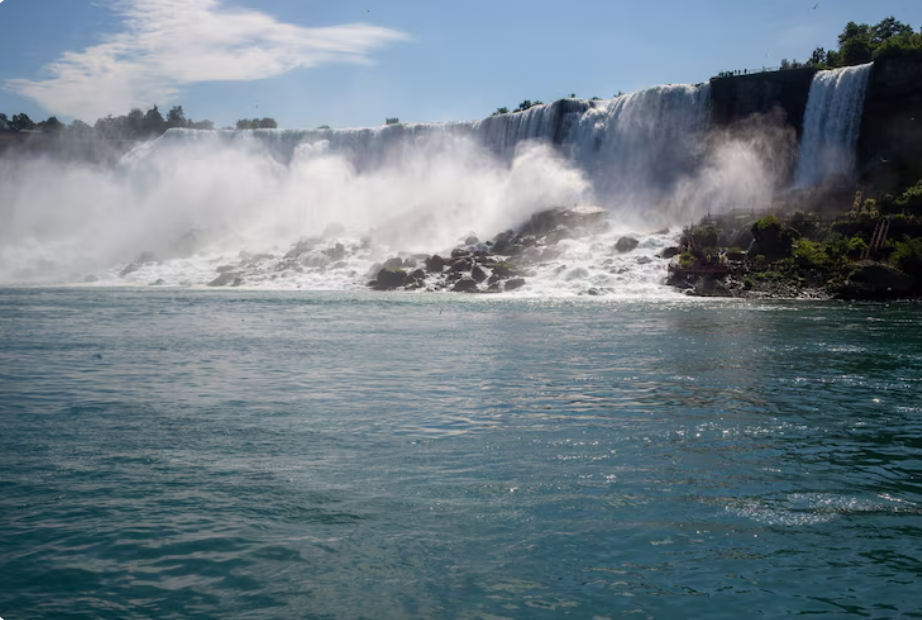
Standing near the falls, what stands out isn’t just the visual scale—it’s the force behind it. The sound is constant and powerful. The ground feels alive with vibration. The mist reaches you before you even realise how close you are.
It’s not a passive experience. It demands your attention.
The Shift From Observation to Immersion
At first, most visitors observe Niagara Falls from a distance. It’s the natural reaction—taking it in, capturing photos, understanding the layout.
But the experience changes when you move closer.
Whether it’s standing near the edge, walking along the curve of the falls, or stepping into areas where the mist surrounds you, the perspective shifts. You stop observing and start engaging with the environment.
That shift is often the most memorable part of the visit.
The Surroundings Add Context
Niagara Falls doesn’t exist in isolation. The surrounding region adds layers to the experience.
There are moments of contrast—quiet scenic routes, sudden viewpoints, and small stops that reveal different aspects of the area. Even brief experiences, like tasting local maple products or pausing at a scenic overlook, create a rhythm throughout the day.
They break up the intensity of the falls and give the experience a more complete shape.
Returning Feels Like a Different Journey
The journey back to Toronto feels noticeably different from the journey there.
In the morning, there’s curiosity and anticipation. On the return, there’s reflection.
The city you left earlier in the day now feels familiar again, but your perspective has shifted. After experiencing something as powerful as Niagara Falls, the structured environment of the city feels sharper, more defined.
It’s a subtle contrast, but a meaningful one.
Why the Journey Matters as Much as the Destination
Many people focus only on reaching Niagara Falls, but the experience is shaped just as much by how you get there.
A well-planned trip allows the day to unfold naturally—from the calm departure to the peak moment at the falls, and finally to the quiet return.
For travellers looking to experience that full progression without worrying about logistics, a Niagara Falls day tour from Toronto can offer a structured way to move through each stage of the journey smoothly.
A Contrast That Stays With You
What makes Niagara Falls memorable isn’t just the falls themselves—it’s the contrast.
From city to nature. From structure to unpredictability. From observation to immersion.
It’s this shift that stays with you long after the trip ends, making the experience feel bigger than a single destination.
